

Location
Thursday, Mar. 12, 2026
Case Western Reserve University Agnar Pytte Center for Science Education and Research
2080 Adelbert Rd.
Cleveland, OH 44106
Parking suggestion: Veale Center on Adelbert Rd (pay by credit card, maximum of $10).
Tentative schedule:
| 1:30 pm | Registration in Hovorka Atrium |
| 2:00 pm | Technical Sessions |
| 5:30 pm | Plenary Talk |
| 6:30 pm | Dinner and Student Awards |
If interested in presenting, please submit your abstract using the following link below by Thursday March 5, 2026.
MiM 2026 Abstract Submission Link
Plenary Talk: Rachel Saylor, Associate Professor, Oberlin College; To fluoresce or not to fluoresce: Progress toward interrogating neurochemical systems in the model organism Caenorhabditis elegans 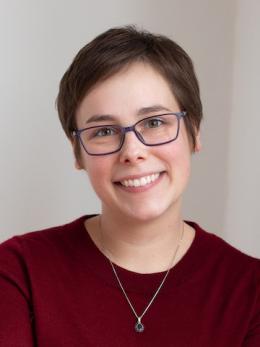
Abstract: Anxiety disorders affect ~44% of the US population and are uniquely difficult to diagnose and treat effectively. This challenge is exacerbated by the lack of specific knowledge of anxiety’s underlying biochemical causes, due in part to the difficulty in analytically probing delicate and complex brain tissue for neurochemical concentration. Historically, one method to sensitively determine neurochemically-relevant primary amines is after their reaction with the reagent naphthalene-2,3-dicarboxaldehyde (NDA), which creates a fluorescent product that is readily detected. Unfortunately, we have observed several practical challenges in routine use of this reaction, including the lack of fluorescence from derivatized primary amines dopamine and serotonin, both of which are important neurotransmitters associated with many neurological disease states, including anxiety. Here, we will discuss how to overcome these analytical challenges, first by determining their causes through fluorescence and nuclear magnetic resonance spectroscopy, then in developing practical methods to recover fluorescence. Finally, we implement our methods in combination with capillary electrophoresis and laser-induced fluorescence detection for the simultaneous determination of over ten biologically-relevant primary amines present in the model organism Caenorhabditis elegans. In the future, this work will serve as a basis for interrogating the connection between primary amine concentrations and behavior in Caenorhabditis elegans.
Bio: Rachel Saylor first discovered her love of analytical chemistry while earning her BS in Chemistry from Wittenberg University. She went on to pursue her PhD at the University of Kansas under the mentorship of Dr. Susan Lunte. After postdoctoral work at the University of South Carolina (including time spent at the Central Institute for Mental Health, Mannheim), she returned to the Midwest to start her independent career. Rachel is now an Associate Professor in Chemistry and Biochemistry at Oberlin College, where her research focuses on developing and using analytical techniques to answer neurobiological questions. As an analytical chemist at an undergraduate institution, her broader goal is to inspire and develop the next generation of analytical scientists through teaching and mentoring undergraduate students.
Menu: Buffet dinner by Foods for Thoughts: (Green salad, Rolls, Marinated Grilled Chicken, Toasted Herbed Couscous (V), Grilled Vegetables, Vegan stuffed bell peppers, Dessert Tray, Iced Tea)
Registration: